The best compression boots for runners are the Cordless Leg & Foot Compression Massager, our top pick at £184.99 for full-leg recovery from toes to thighs with up to 4 hours of battery life. Budget buyers can choose the Pneumatic Leg Massager at £59.99, while the Wireless Calf Massager at £29.99 suits travel.
The Pneumatic Leg Massager covers feet to thighs with six modes and three intensity levels.
The Air Wave Compression Leg Massage Instrument offers computer-controlled pressure but no foot coverage.
Keep sessions to 15 to 30 minutes and start on the lowest pressure setting.
Two to four sessions a week covers most recreational training loads.
Compression boots are a recovery tool, while compression socks provide constant support during or after activity.
Which compression boots suit your training?Explore our recovery range with free UK delivery and find your fit.
Comparison Table: Best Compression Boots for Runners at a Glance
Finding the best compression boots for runners comes down to matching the device to how you train, recover and travel. At Infinite Finds, we stock five options that cover full-leg recovery, budget buying, targeted pressure, portability and lightweight calf relief. Here is how they compare before we break each one down.
Product
Price
Coverage
Best For
Cordless Leg & Foot Compression Massager
£184.99
Toes to thighs
Full-leg recovery at home
Pneumatic Leg Massager
£59.99
Feet to thighs
Budget buyers wanting heat
Air Wave Compression Leg Massage Instrument
£127.99
Legs
Targeted pressure and heat
Wireless Calf Massager
£29.99
Calves
Portability and travel
Electric Calf Massager
£59.99
Calves
Lightweight post-run relief
Price
Cordless Leg & Foot Compression Massager £184.99
Pneumatic Leg Massager £59.99
Air Wave Compression Leg Massage Instrument £127.99
Wireless Calf Massager £29.99
Electric Calf Massager £59.99
How We Chose and Tested These Compression Boots
The compression boots below are Infinite Finds products, each listed with its coverage and key features. Our picks come from Infinite Finds' own range, so we know exactly what each device does and who it suits.
A common mistake is buying the biggest, most expensive unit first. The list below runs from the most complete recovery setup to the lightest, cheapest option.
1. Cordless Leg & Foot Compression Massager: Best Overall for Full-Leg Recovery
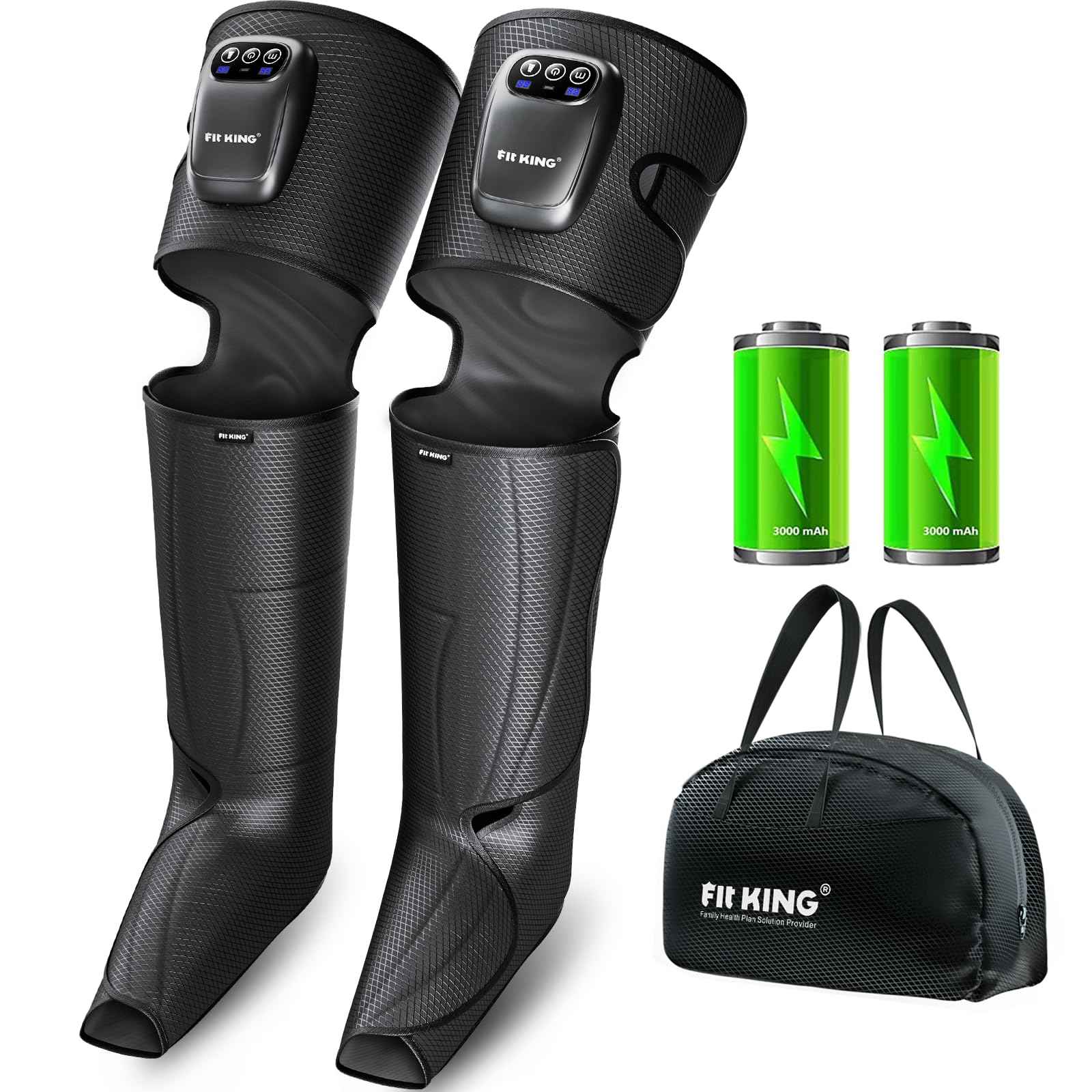
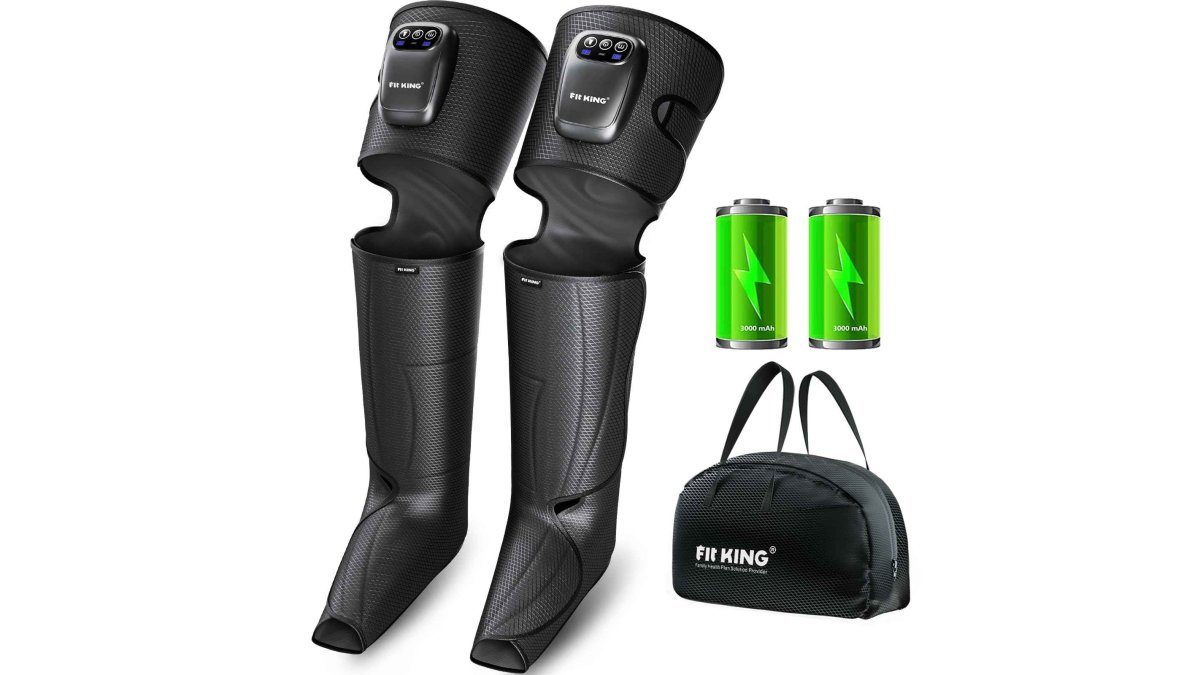
Our top pick is the Cordless Leg & Foot Compression Massager because it delivers air compression therapy from toes to thighs with no external wires or hoses. Two high-capacity batteries power up to 4 hours of use, and each wrap runs independently, so you can treat one leg or both.
Four large massage chambers per wrap simulate the kneading and stroking of a professional massage. USB charging means you can top it up from a laptop or power bank between sessions. View the Cordless Leg & Foot Compression Massager to check the full specification and price.
Cordless Leg & Foot Compression Massager
Cordless Leg & Foot Compression Massager
Best for: runners who want complete leg coverage without being tied to a socket.
Skip if: you only ever get tight calves and want to spend under £50.
2. Pneumatic Leg Massager: Best Budget Compression Boots for Recovery
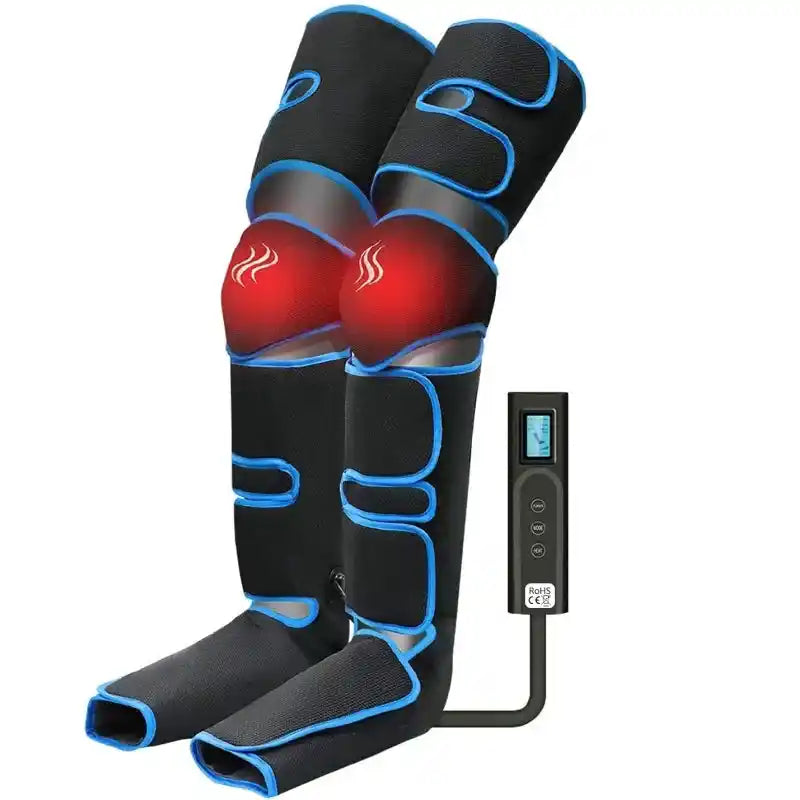
The Pneumatic Leg Massager is the value pick at £59.99, and it still covers feet to thighs with 360° compression. Six massage modes and three intensity levels give you real control, and optional knee heat therapy adds warmth for stiffer joints.
A rechargeable battery keeps it cord-free, and built-in auto shut-off plus low-pressure protection make it safe to use without watching the clock. Check the Pneumatic Leg Massager price and details if you want full-leg coverage on a tighter budget.
Pneumatic Leg Massager for Compression & Muscle Relief
Best for: first-time buyers who want full-leg compression without a big outlay.
Skip if: you need independent left and right control.
3. Air Wave Compression Leg Massage Instrument: Best for Targeted Pressure and Heat
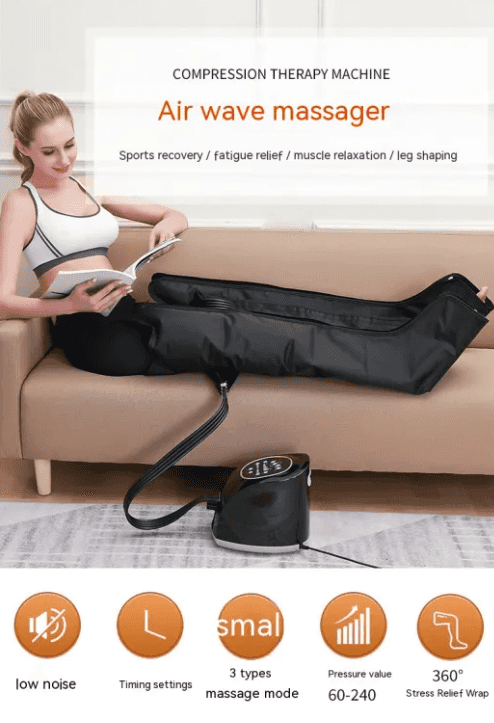
Computer-controlled air wave technology is what sets the Air Wave Compression Leg Massage Instrument apart. It delivers customised, targeted compression to relieve tension and support circulation, and the built-in timing function lets you set exact session lengths rather than guessing.
Heat therapy adds a second layer of relief, and the premium leather finish adds a luxurious feel. At £127.99 it sits in the middle of the range. See the Air Wave Compression Leg Massage Instrument for the full feature list.
Air Wave Compression Leg Massage Instrument
Best for: runners who want precise session timing and heat in one device.
Skip if: you need foot coverage, which this model does not include.
4. Wireless Calf Massager: Best for Portability and Travel
Travel and gym-bag recovery is where the Wireless Calf Massager earns its place. It uses 360° air pressure plus a constant-temperature hot compress to ease tired calves, with three adjustable modes and adjustable straps for a secure fit on any calf size.
At £29.99 it is the cheapest way into pneumatic compression, and the wireless, rechargeable design means no hunting for a socket in a hotel room. It covers calves only, so it will not replace a full-leg device. View the Wireless Calf Massager to compare it against the rest of the range.
Best for: runners who travel, race away from home or train at a gym.
Skip if: you want thigh or foot compression as well.
5. Electric Calf Massager: Best Lightweight Option for Post-Run Calf Relief
Ultrasonic vibration and infrared light therapy drive the Electric Calf Massager, a compact unit built for quick calf relief rather than full-leg pressure. Three gear settings adjust intensity, and the 3200mAh battery charges over USB for cord-free use.
It comes in single or double configurations in pink and grey, so you can treat both calves at once. Note that this uses ultrasonic vibration and infrared light therapy rather than air compression. Look at the Electric Calf Massager for sizing and colour options.
Best for: runners who prefer vibration over squeezing pressure.
Skip if: you specifically want pneumatic boots.
How Long to Use Compression Boots for the Best Results
The guidance below is a practical framework, not a clinical prescription. Session lengths should follow the product listings, which generally recommend 15 to 30 minutes.
After a long run (90 minutes or more). Use a session of around 30 minutes at low-to-medium pressure, once you have cooled down and had something to eat and drink. Start on the lowest setting and step up one level every five minutes if the wrap feels comfortable. Calf-only devices are fine for this session, but if you have a full-leg unit, run it from feet to thighs so the whole limb gets sequential pressure.
After a speed session or hill repeats. Calves and Achilles take the load, so 20 minutes on a calf-focused setting is often enough. Keep pressure moderate; very high pressure straight after hard intervals can feel uncomfortable on already sensitised tissue. A common pattern is 15 minutes on each calf at level two of three, then a further 10 minutes at the lowest setting if the legs still feel heavy.
After a race. Treat the first session as recovery, not therapy: 20-30 minutes at low pressure later the same day, then a normal session the following morning. Avoid maximum pressure in the 24 hours after a race, when muscles are most sore and swollen.
On rest days. This is where consistency pays off. A single 20-minute session at low pressure is enough to maintain the routine without turning recovery into another training stress.
Pressure selection. Start low and increase one level at a time. If you feel throbbing, numbness or a pins-and-needles sensation, drop a level or stop. Higher pressure is not automatically better; the aim is a firm, rhythmic squeeze that you could comfortably sit through for half an hour.
Frequency. Two to four sessions a week covers most recreational training loads. During a heavy block or race week, daily short sessions are reasonable. More than that is unlikely to add benefit and makes it harder to judge whether the boots are actually helping. Keeping sessions brief and consistent makes it easier to weigh the boots against other recovery tools, a question Aurevia Wellness can help put in perspective.
What the evidence does and does not show. Claims that boots improve race times, prevent injury or speed muscle repair are not well established, so treat them as a comfort and routine tool rather than a performance shortcut.
Watch out: if a session leaves a leg more swollen, hotter or more painful than before, stop using the boots and seek advice from a GP or physiotherapist rather than adjusting the pressure and trying again.
Compression Boots vs Compression Socks: Which Do Runners Need?
They do different jobs. Compression boots are a recovery tool used after running, while compression socks are worn during or after activity for graduated support. Boots deliver intermittent pneumatic pressure; socks provide constant, mild compression.
Many runners use both. Our Recovery Compression Socks suit all-day wear and travel, while boots handle deeper post-run recovery. If you had to pick one, choose boots for heavy training and socks for daily support.
Compression Boots Safety: Who Should Check Before Buying
Compression boots push air pressure through the legs, so it is worth checking the points below before use. The points below cover who should seek advice first, how to use the boots safely session to session, and how fit affects both comfort and risk.
Who should check with a clinician first. Speak to a GP or physiotherapist before using compression boots if you have a history of blood clots or deep vein thrombosis, varicose veins, heart failure or other heart conditions, kidney problems, or circulation problems such as peripheral arterial disease. The same applies if you are pregnant, if you have diabetes with reduced sensation in the feet or legs, or if you have recently had surgery on a leg. Speak to a clinician first if any of these apply.
When not to use them at all. Never use compression boots on a leg with unexplained swelling, a suspected muscle strain or tear, a fresh injury, an open wound, a rash or an infection. If you have a suspected DVT, typically a calf that is swollen, warm, tender and sometimes red, especially after travel or immobility, do not use the boots and seek urgent medical advice instead.
Session-level safety checks. Start every session on the lowest pressure setting and increase one level at a time. Stop immediately if you feel pain, numbness, tingling, a burning sensation or sudden coldness in the foot or toes. These can be signs that the wrap is too tight or that pressure is too high for your leg. Keep sessions to the durations in the protocol section above, and never fall asleep in the boots, because you will not notice discomfort building.
Fit matters for safety as well as comfort. Compression boots work best when the wrap sits snugly but not tightly, with no bunching behind the knee and no gap at the ankle. If you are tall, check the maximum calf and thigh circumference the wrap is designed for; an undersized wrap will pinch, and an oversized one will not deliver even pressure. If your legs are noticeably different in size, treat each leg separately and start with the larger leg on a lower setting. Runners with very muscular calves often need a size up even when height suggests otherwise.
Skin and hygiene. Wear thin trousers or the supplied liner socks if the wrap irritates your skin, and wipe the inside of the wraps after use. Do not use the boots on broken or irritated skin, and check your legs after each session for red marks that do not fade within a few minutes.
Electrical and battery safety. Use the charger supplied with the device, avoid charging overnight on soft furnishings, and do not use a cordless unit while it is charging. If the battery or charger becomes hot, swollen or damaged, stop using it.
Watch out: if you are unsure whether compression boots are appropriate for you, the safest course is to ask a GP or physiotherapist before your first session rather than testing them on a hard training week.
Frequently Asked Questions
Do compression boots help runners recover?
They can help with the feeling of heavy, tired legs after a long run. The evidence is mixed on measurable performance gains, so treat compression boots as one part of recovery alongside sleep, food and easy days. A 20 to 30 minute session after training is the usual approach.
How long should runners use compression boots?
Most sessions run 20 to 30 minutes. The Cordless Leg & Foot Compression Massager is designed for 20 to 30 minutes daily, while the Wireless Calf Massager and Electric Calf Massager are listed for 15 to 20 minutes per session. Start on a lower pressure setting and build up. Longer is not automatically better, and if your legs feel worse rather than looser, shorten the session.
Are compression boots safe for everyone?
Not everyone should use them without checking first. If you have poor circulation, a history of blood clots, varicose veins that are painful, open wounds, or a condition affecting the legs, speak to a GP or physiotherapist before buying. Stop immediately if you feel numbness, tingling or sharp pain.
When should you use compression boots after a run?
Use them within a few hours of finishing, once you have cooled down and had something to eat and drink. Many runners use them in the evening after a hard session or long run, and some use a shorter session the morning after. Avoid using them immediately after a race before you have rehydrated.