To choose a sleep mask for blackout comfort, match the shape to your sleep position and face geometry: side sleepers need low-profile contoured cups and a strap that stays put, while stomach sleepers need thin, flexible cushioning. Check that the mask seals around your nose and temples, since gaps rather than thin fabric cause most light leaks.
Back sleepers can wear most mask shapes but should prioritise strap comfort.
Hold a mask up to a bright window: if you see the bulb's outline, it will pass ambient light.
Run the five-minute fit test lying on each side, since back-only testing flatters almost every mask.
Wash a sleep mask by hand every one to two weeks in cool water and air dry it flat.
Replace the mask when the strap stops holding tension or the padding flattens.
Which sleep mask suits how you sleep?Explore contoured, blackout and satin sleep masks with free UK delivery from Infinite Finds.
The fastest route to genuine blackout comfort is to match the mask to how you actually sleep, not to how a product page says you should. Back sleepers can wear almost any design. Side sleepers need a mask that won't shift against the pillow. Stomach sleepers need thin, flexible cushioning that doesn't dig in.
Get the geometry right first and everything else follows.
Here's how to think about it:
Back sleepers: most shapes work; prioritise strap comfort.
Side sleepers: look for contoured eye cups and a strap that stays put.
Stomach sleepers: choose a flat or low-profile padded mask.
Combination sleepers: a contoured design with an adjustable strap is the safest bet.
Matching the Mask to Your Nose Bridge and Cheekbones
A high nose bridge creates a gap at the bottom edge of most flat masks. Low bridges let light in at the top. Wide cheekbones push a flat mask sideways, which opens a leak near the temples.
The fix is simple: contoured designs sit around the nose rather than on it, and adjustable straps let you pull the lower edge snug without pressing on the eyes. If you have a prominent bridge, check that the mask has a cut-out or flexible seam there. If your face is narrow, a wide satin blindfold will bunch at the sides.
What Makes the Best Sleep Mask for Light Blocking
A sleep mask for light blocking works best when it covers the area around the nose and temples and fits snugly when you move. Thickness alone doesn't block light; gaps do. A thick mask with a poor edge seal will leak more than a thin one that sits flush.
Light reaches your eyes by three routes, and each needs a different fix:
Direct transmission through the fabric. Hold the mask up to a bright window or a lamp. If you can see the bulb's outline through the material, it will pass some ambient light. Dark, tightly woven fabrics, dense cotton, mulberry silk with a high momme weight, or a bonded outer layer, block more than thin, pale material. Pale satin looks luxurious but transmits noticeably more light than black or navy.
Edge leakage at the nose and temples. This is the dominant cause of a failed blackout. A flat mask bridges the curve of your nose and cheekbones, leaving a crescent-shaped gap at the bottom edge. Contoured masks with a nose cut-out or a flexible seam close that gap. Check the lower edge by pressing gently along the nose bridge, if the fabric lifts away from the skin, light will find it.
Leakage caused by movement. A mask that seals when you lie still can open when you roll onto your side, because the pillow pushes the lower edge sideways. A strap that holds tension and a low-profile shape reduce this.
Strap tension is the balancing act. Too loose and light leaks at the temples; too tight and the mask presses on your face, creases your skin, and gets pulled off in your sleep. Aim for a seal you can feel but not a clamp.
Light exposure at the wrong time disrupts melatonin release and makes it harder to fall asleep, which is why the NHS guidance on insomnia and sleep hygiene puts a dark sleeping environment near the top of its advice.
A Five-Minute Fit and Light-Leak Test
You can judge blackout coverage before you commit to a full night, and again inside any return window. Run this test in a normally lit room, then repeat in a darkened room with a lamp positioned behind you.
Seat the mask without tightening the strap. Place it so the lower edge follows the line of your nose bridge rather than sitting across the tip. Contoured cups should sit around the eyes, not on the lids.
Check the nose. Look down toward your feet. Any light visible at the bottom edge means a gap. Press the edge gently against the bridge, if it springs back, the seal is relying on strap tension alone and will fail when you move.
Check the temples. Turn your head slowly left and right. Light appearing at either temple points to a mask that is too narrow or a strap that is too loose.
Check the lower edge and cheeks. Smile and open your mouth slightly; your face changes shape and a marginal seal can open. If light appears, the mask is sitting too high or the cheek coverage is too shallow.
Roll onto each side. Lie on your left side for a minute, then your right. The pillow will push the mask; note whether the nose edge lifts. This is the single most useful check for side sleepers.
Leave it on for ten minutes in dim light. Discomfort that makes you want to remove the mask will beat blackout performance every time. Pressure on the eyes, heat at the cheeks, or a strap digging in are all reasons to try a different shape.
Watch out: testing only while lying on your back flatters almost every mask, the leaks that matter usually appear once your face meets the pillow.
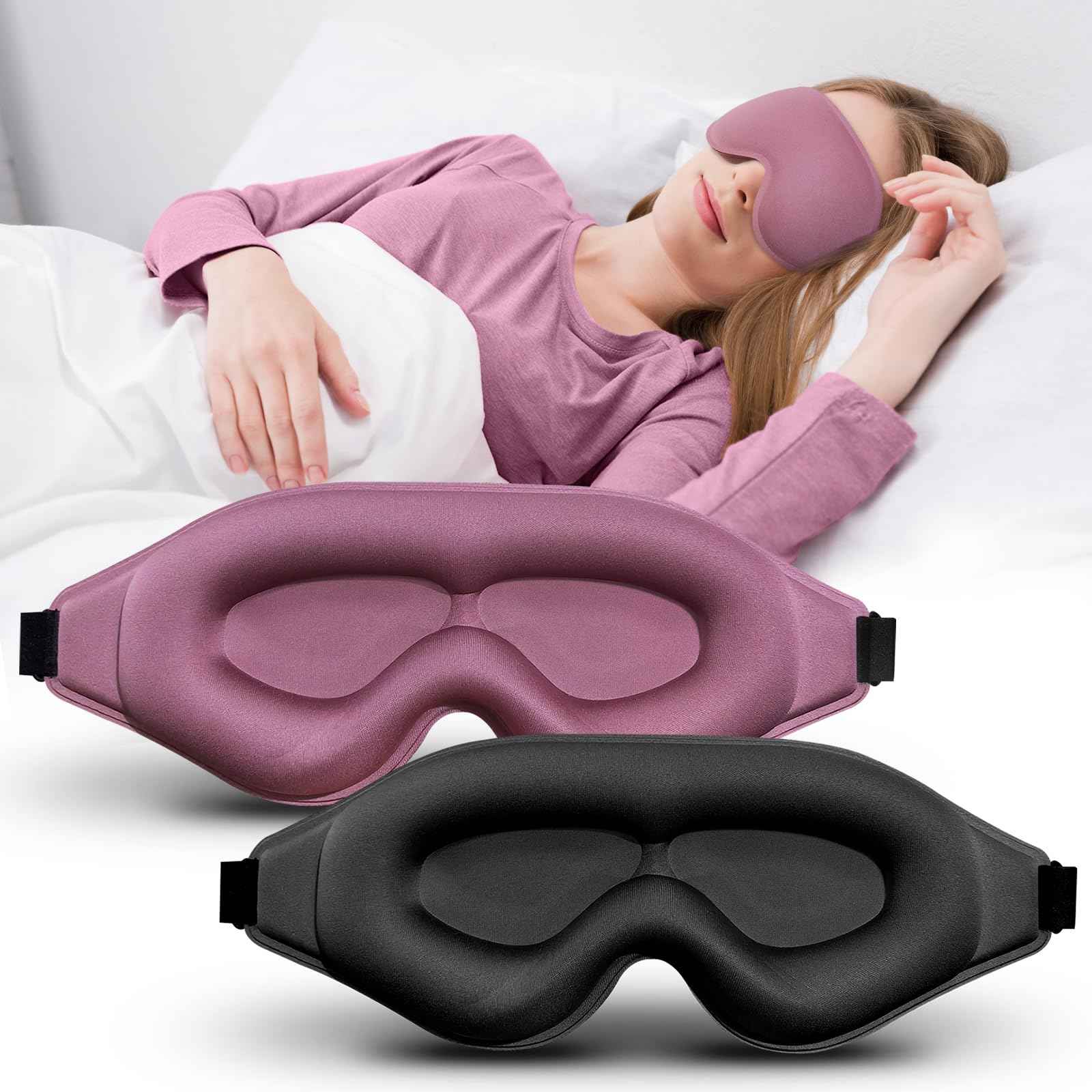
If you are looking for a fuller blackout option, our 3D blackout sleep eye mask is available in our range.
3D Blackout Sleep Eye Mask – Light Blocking & Comfortable.
Contoured Sleep Mask vs Flat Mask: Which Blocks More Light
A contoured sleep mask blocks more light for most people, because it seals around the nose and cheekbones instead of resting flat across them. A flat mask is lighter and cheaper, but it leaks wherever your face curves away from it.
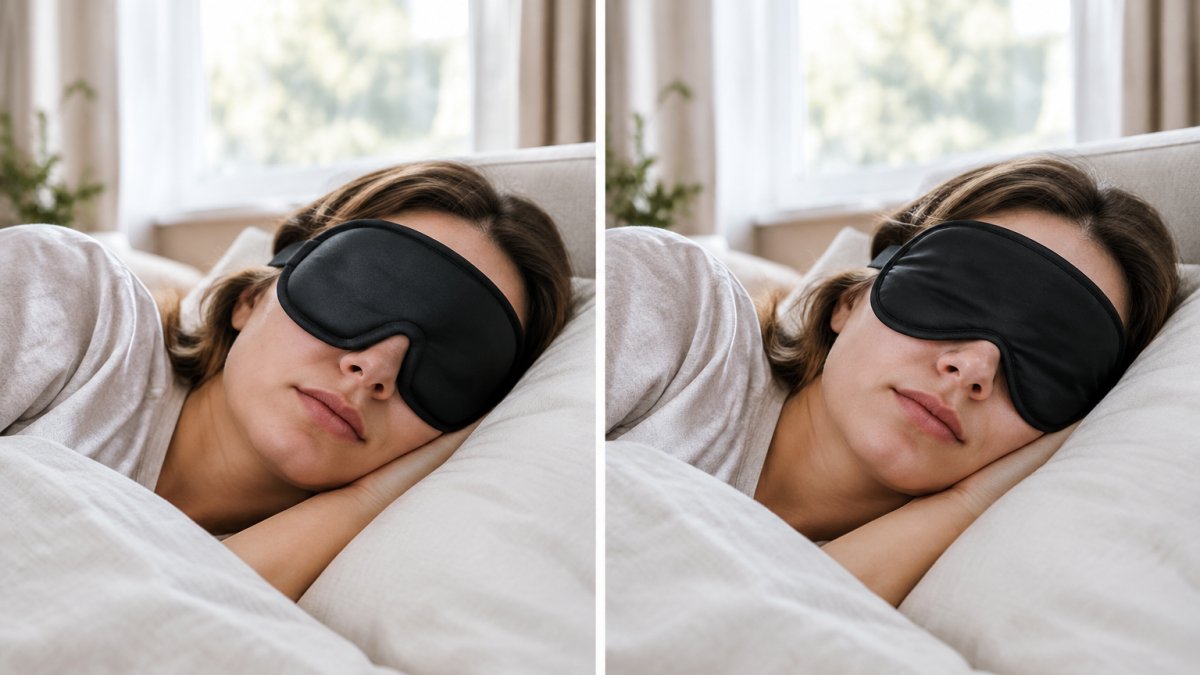
Person resting in bed wearing a contoured eye mask in a room filled with soft morning light.
The trade-off is real. Contoured designs add bulk, which some side sleepers dislike. Flat masks pack smaller for travel and cost less. If you want to see a contoured design up close, the 3D contoured sleeping eye mask is available in our range.
3D Contoured Sleeping Eye Mask – Light Blocking
Feature
Contoured mask
Flat mask
Light blocking
Strong at nose and temples
Leaks at curves
Pressure on eyes
None, cups sit clear
Can press on lashes
Side sleeping
Good if strap holds
Shifts more easily
Travel
Bulkier
Packs flat
Price
Higher
Lower
Choosing a Sleep Mask for Side Sleepers
The best sleep mask for side sleepers is one with a low-profile contoured shape and a strap that won't slide against a pillowcase. Side sleeping is where most masks fail, because the pillow pushes the mask sideways and opens a gap at the nose.
What to check before you buy:
Side depth: the eye cup shouldn't collapse when your cheek meets the pillow.
Strap material: satin straps slide; elastic with a adjuster holds better.
Seam placement: flat seams on the pillow side reduce pressure points.
Ear clearance: a mask that covers the ears will feel hot and get pushed off.
A common mistake is buying an oversized mask for side sleeping. More fabric means more to bunch up. Snug and simple wins.
Materials, Breathability and Pressure on the Eyes
Fabric choice decides whether a mask feels cool or clammy by 3am. Silk and satin feel smooth and stay cooler against the skin. Memory foam padding adds cushioning but traps heat. Breathable mesh panels help, though they can let light through if placed badly.
If you run warm or have sensitive skin, a silk feel cooling sleep eye mask is the gentler option: smooth against the face, light on the eyes, and easy to wear all night.
Strap Design, Fit and Stopping Light Leakage
Light leakage almost always traces back to the strap or to a mismatch between the mask's shape and your head. A mask that fits perfectly in the shop will leak by morning if the band stretches, slips, or can't be adjusted finely enough.
Failure one: the strap is too loose at the back. The mask slides down your forehead or lifts at the nose when you turn.
Failure two: the strap is too tight at the front. You get a seal, but the mask presses on your eyes or leaves marks, and you wake up having pulled it off.
Failure three: the strap holds, but the mask shifts on the pillow. Satin and silk straps slide easily against a cotton or linen pillowcase.
What to look for when comparing straps:
Adjustable sliders rather than a fixed elastic loop, so you can tune tension to your head shape.
A wide band that spreads pressure across the back of the head instead of cutting in.
Rear closure so the buckle doesn't sit against your pillow and create a pressure point.
Enough length to fit over hair without pulling, anyone with thick hair, braids, or a head covering should check the maximum circumference before buying.
A strap that detaches, which makes washing easier and lets you replace a stretched band without replacing the whole mask.
Matching the Mask to Your Face Shape and Nose Bridge
Most guidance stops at "adjustable strap". In practice, persistent leaks usually trace to facial geometry, and a few specific checks solve them.
High nose bridge: a flat mask bridges the peak and leaves a gap underneath. Look for a nose cut-out or a flexible wire sewn into the lower edge that you can mould to the bridge.
Low or flat bridge: light enters at the top edge near the brow. A mask with a slightly deeper brow coverage, or one worn a fraction lower, closes it.
Wide cheekbones: a flat mask is pushed sideways, opening a leak at the temples. A contoured design that wraps around the cheekbone rather than resting on it holds its seal.
Narrow face: a wide satin blindfold bunches at the sides and the folds create channels for light. A smaller contoured shape fits better than an oversized flat one.
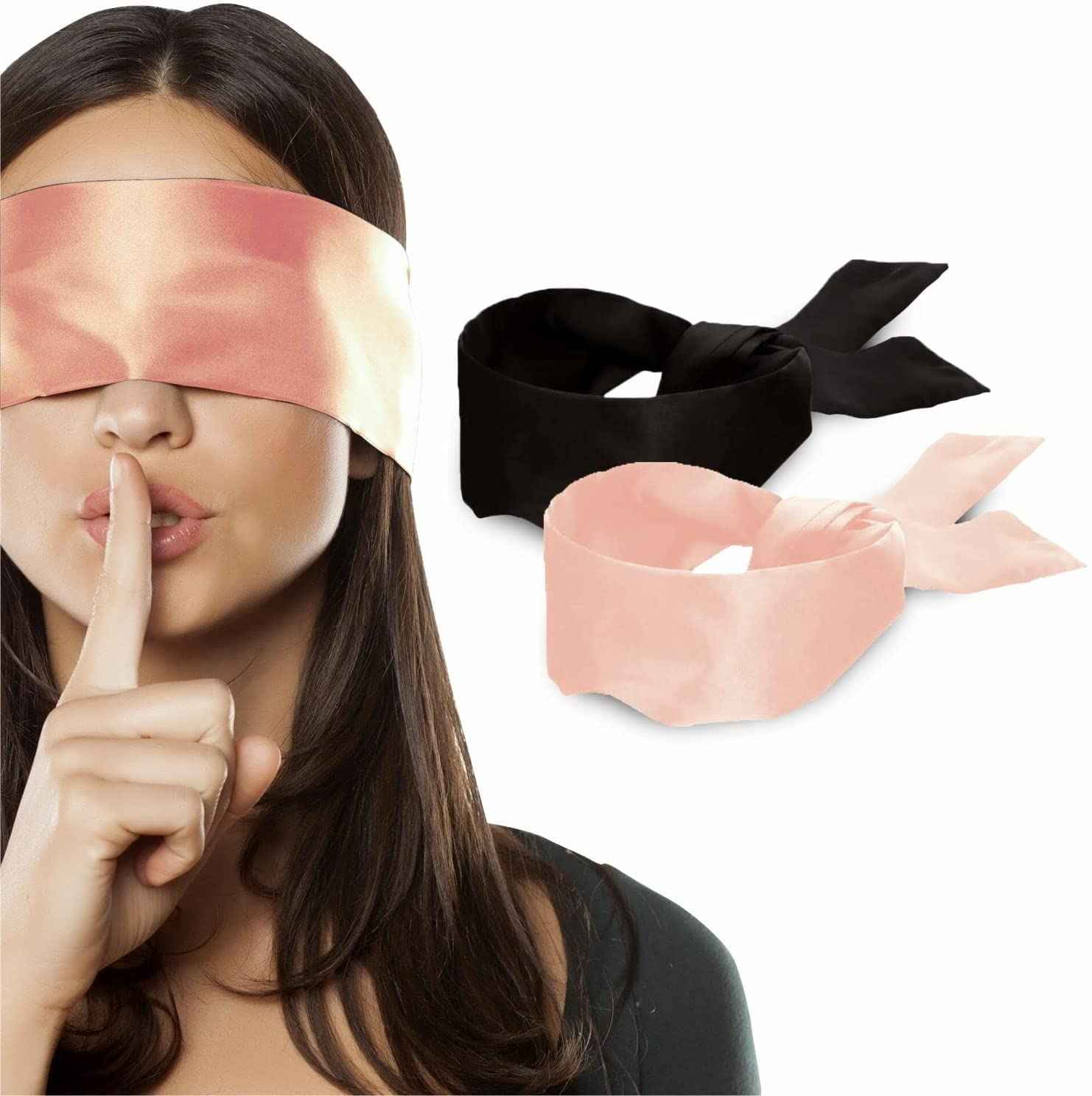
If a simple design suits you, our satin blindfold sleep mask is available in our range. Test it by turning your head side to side, then rolling onto each side, before you commit to a full night, and if you are buying online, run the same test as soon as it arrives, while you are still inside the return window.
Wash a sleep mask every one to two weeks by hand in cool water with a mild detergent, then air dry flat away from direct heat. Machine washing shortens the life of elastic and foam, even on a delicate cycle.
A practical routine:
Rinse the mask in cool water after each week of use.
Use a small amount of gentle detergent, no fabric softener.
Squeeze, don't wring, and reshape the eye cups.
Air dry flat; never tumble dry memory foam.
Check the strap monthly for stretch or fraying.
Consider replacing the mask when the strap stops holding tension, the padding flattens, or the fabric starts letting light through. If you wear makeup, wash more often and replace sooner.
Pick Your Mask From the Infinite Finds Sleep Range
Choosing well comes down to three checks: does it seal around your nose, does it stay put when you roll over, and does it feel cool enough to keep on until morning. Get those right and blackout comfort stops being a gamble.
Our sleep range includes a satin blindfold sleep mask at £8.99 and a 3D blackout sleep eye mask at £21.99. If you want earplugs alongside, our 3D blackout sleep mask with magnetic earplugs bundles both. Free UK delivery is available, and our curated range keeps your choices simple.
Most sleep problems that masks can help with come down to light and pressure, and both are fixable with the right design. Infinite Finds stocks a curated sleep range with free UK delivery, including contoured 3D masks, cooling silk-feel options and adjustable satin blindfolds, so you can match the mask to your sleep position rather than guessing.
Frequently Asked Questions
How do I stop light leaking around the nose of a sleep mask?
Light leakage usually comes from a mask that is too flat or too loose across the nose bridge. Look for a contoured design with a raised section over the nose, or a padded mask that moulds to your cheekbones. Adjust the strap so the mask sits snug but not tight, then press the lower edge gently against your nose and check in a mirror for gaps. If light still creeps in, a mask with a wider nose cut-out or memory foam padding will seal better than a thin satin band.
Are contoured sleep masks better than flat ones for blackout comfort?
For most people, yes. A contoured sleep mask uses 3D shaping to sit away from your eyes while wrapping closer at the edges. Flat masks are lighter and cheaper, but they press against the eyes and tend to let light in around the nose.
How tight should a sleep mask fit, and how often should I wash it?
A sleep mask should feel secure without leaving marks. You should be able to slide one finger under the strap, and the mask should stay in place when you turn over. Wash a fabric mask every one to two weeks in cool water with a mild detergent, either by hand or in a laundry bag on a delicate cycle, then air dry. Replace it when the elastic loses stretch, the padding flattens or the fabric starts to pill.
Which sleep mask materials suit sensitive skin and side sleepers?
If you have sensitive skin, avoid rough seams and tight elastic, and choose a mask with a soft fabric lining. Wash it regularly to remove oils and makeup, and check the care label before using any detergent.