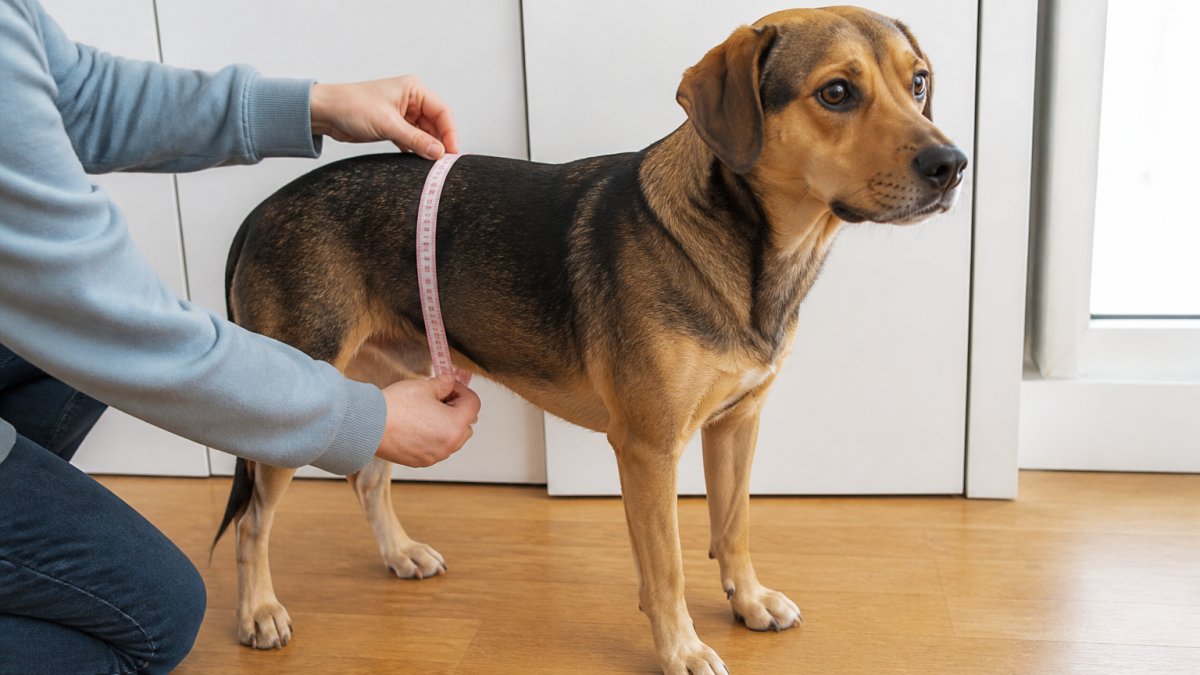
To measure your dog for a comfortable harness, wrap a soft tape measure around the widest part of the rib cage just behind the front legs for chest girth, then around the widest part of the neck. Record both in centimetres and check twice, keeping the tape snug but not tight.
Measure chest girth first, since most harness size charts use that number.
Your dog's chest girth should sit inside the size range, not at the edge.
When between sizes, go up and tighten the adjustable straps to fit.
A well-fitted harness lets you slide two fingers under every strap.
Check a puppy's chest girth every few weeks and choose adjustable straps.
Getting the Tape Measure Right: Chest Girth and Neck
A comfortable harness starts with two numbers: chest girth and neck size. Measure your dog by wrapping a soft tape measure around the widest part of the rib cage, just behind the front legs, then around the widest part of the neck.
Measure chest girth first (the number most size charts use), then neck at the widest point, and optionally head circumference just behind the ears for slip-over designs. If you are adding a dog car harness seatbelt accessory, these chest and neck measurements are the ones it depends on. Write both down in centimetres and check twice.
Person using a soft tape measure to check the chest girth of a medium-sized dog standing on a wooden floor
Keep your dog standing naturally, use a soft tape laid flat, and keep it snug but not tight. For thick coats, measure over the fur but press gently so you are not measuring air.
Two measurements do most of the work when sizing a harness.
Measurement
Where to measure
Note
Chest girth
Widest part of the rib cage, just behind the front legs
Measure first; most size charts use it
Neck size
Widest part of the neck
Measure second
Head circumference
Just behind the ears
Optional, for slip-over designs
Units
Record in centimetres
Check twice
Reading a Dog Harness Size Chart and Choosing Between Sizes
A dog harness size chart lists chest girth ranges, and that range is the number to match first; neck size and weight are secondary. Your dog's chest girth should sit comfortably inside the range, not at the edge, when between sizes, go up, since adjustable straps can tighten a larger harness but a too-small one pinches at the armpits. The no-pull harness with a size guide shows how adjustable straps fine-tune the fit.
No-Pull Dog Harness | Soft Padded, Adjustable Nylon with Reflective Strips
How Tight Should a Dog Harness Be and How to Check Dog Harness Fit
A well-fitted harness lets you slide two fingers under every strap, no more, no less. Start at the chest strap, check the neck strap the same way, then the straps behind the front legs, watching the armpits since pinching shows up there first. Then test it in motion: walk a few steps, ask for a sit, and watch that it does not twist or slide toward the shoulders.
Reflective Dog Harness | Adjustable, Comfortable & Safe for Daily Walks
Adjustable Dog Training Harness | No-Pull, Breathable & Escape-Proof
How to measure a puppy for a harness
Measure your dog as a puppy exactly as you would an adult, but check the chest girth every few weeks and pick a harness with adjustable straps, since a harness that fits at four months may not fit at eight.
What if my dog's measurements fall between sizes?
Go up a size and use the adjustable straps to take in the extra room. A borderline measurement is a sign to choose adjustability over a fixed fit.
Frequently Asked Questions
How do I know what size dog harness to buy?
Measure the chest girth first: wrap a soft tape measure around the widest part of the rib cage, just behind the front legs, and note the number in centimetres. Then measure the neck at its widest point. Compare both figures against the dog harness size chart for the specific harness you want, not a generic chart, because sizing varies between designs. If your dog falls between two sizes, choose the larger one and tighten the adjustable straps.
How tight should a dog harness be?
A harness should sit snug enough that it cannot slip over the head or shoulders, but loose enough that you can slide two fingers under every strap. Check the chest and neck straps separately, since one may need adjusting more than the other. After a short walk, look for red marks, flattened fur or rubbing behind the front legs. Those signs mean the harness is too tight or the straps are sitting in the wrong place.
What if my dog is between harness sizes?
Size up rather than down. A harness that is slightly too large can be tightened at the adjustable straps, but one that is too small will pinch the armpits and restrict movement. Measure twice to confirm the chest girth, then check whether the harness has enough adjustment range on both the chest and neck straps to close the gap. If your dog sits at the very top of a size range, the next size up is usually the safer choice.
Getting the measurements right takes ten minutes, but it decides whether every walk is comfortable or a constant battle with rubbing and slipping.
At Infinite Finds, we stock pet gear built around adjustable, secure fits. Our harnesses offer soft padding to prevent chafing, fully adjustable chest and neck straps, and reflective detailing for low-light walks. Get started with Infinite Finds and give your dog a harness that fits properly from the first walk.