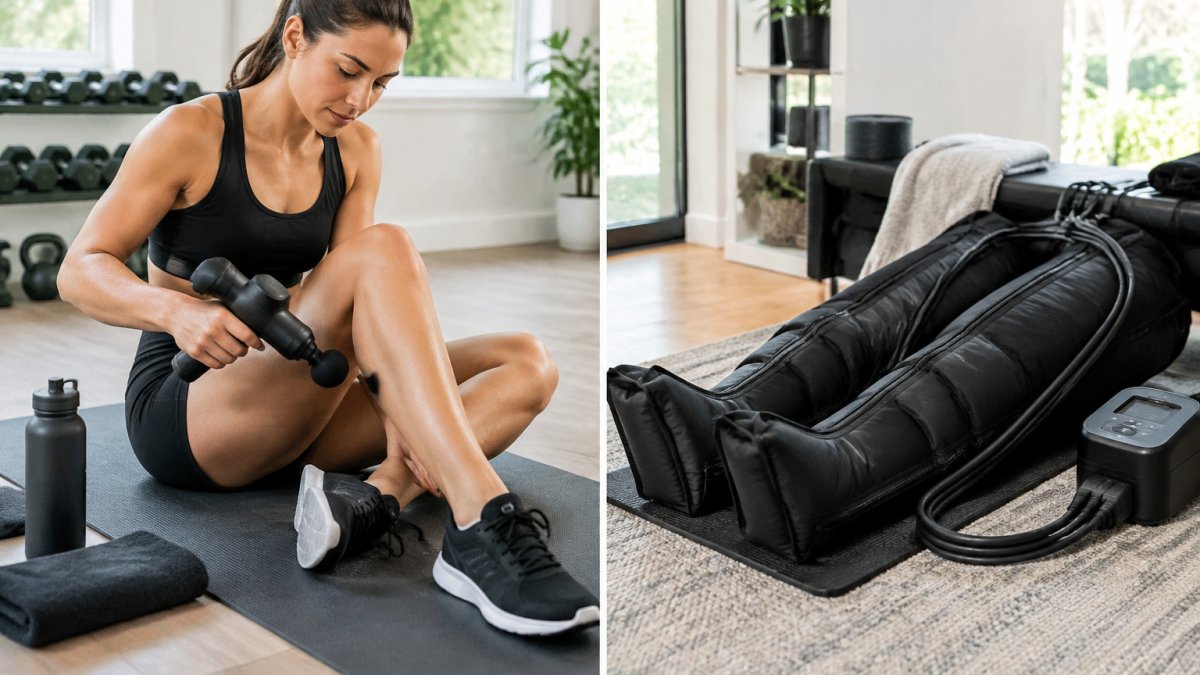
Northsports vs Therabody depends on what you need from a device, since the two sit at different ends of the recovery market. Handheld percussion guns suit quick, targeted use at lower prices, while compression boots or cold immersion suit full-leg or whole-body sessions if you have space at home.
Percussion Massage Gun with 4 Heads costs £44.99 and offers six speed levels from 1600 to 3600RPM.
Massage guns target one area at a time, making them useful for a sore calf or tight shoulder.
Compression boots are a comfort and recovery aid, not a guaranteed performance enhancer.
Measure both legs before buying compression boots, because poor sizing reduces the pressure effect.
Use low speeds for your first session and spend around 10 minutes on the calves or shoulders.
Northsports and Therabody sit at different ends of the recovery tool market, and the right pick depends on what you need from a device. This guide compares the decision criteria that matter most to UK buyers rather than declaring one brand the universal winner. If you are weighing northsports vs therabody recovery tools, the first question is whether you want a handheld percussion device or a broader recovery setup.
Handheld percussion guns are the most common entry point. They are quick to use, portable and priced well below premium systems. Compression boots and cold immersion suit people who want full-leg or whole-body recovery sessions and have space at home for them.
Specifications and Price Comparison
Our own range gives a clear reference point for what to expect at each price tier. The Percussion Massage Gun with Adjustable Speeds starts at £20.99, the Electric Deep Tissue Foam Roller at £21.99, the Percussion Massage Gun with 4 Heads at £44.99, and the Deep Tissue Massage Gun for Muscle Relief at £35.99. The Percussion Massage Gun with 4 Heads offers six speed levels from 1600 to 3600RPM and four interchangeable heads, which suits people who want to target joints, large muscles and the spine with one device.
Percussion Massage Gun with 4 Heads
Specification detail matters more than headline price. Check motor speed, number of heads, battery runtime and noise level before you compare figures across brands. Ask for the full spec sheet from any seller before you buy, because not every listing states battery capacity or attachment counts.
Price of Infinite Finds recovery tools (GBP)
Percussion Massage Gun with Adjustable Speeds £20.99
Electric Deep Tissue Foam Roller £21.99
Deep Tissue Massage Gun for Muscle Relief £35.99
Percussion Massage Gun with 4 Heads £44.99
Massage Guns vs Compression Boots: Which Recovery Method Fits
A massage gun applies percussive pressure to one area at a time, which makes it useful for a sore calf, a tight shoulder or a specific trigger point.
Fitness enthusiast using a handheld percussion massage gun on their calf in a home gym
If you train in short bursts and need to loosen a single muscle group, a massage gun is usually the practical choice. If you want to recover the whole lower body after a long run or a heavy leg day, compression boots may fit better. For targeted work with a handheld device, see our guide to the best massage guns for back muscles for more detail on choosing a model.
Many people use both. A massage gun handles specific problem spots, and a foam roller or compression session covers the wider area. Start with one method, track how your muscles respond over two or three weeks, and add the second only if you need it.
Best Compression Boots for Muscle Recovery and Their Limits
Compression boots work by inflating chambers around the leg in sequence, from ankle to thigh, then releasing. The pressure gradient pushes fluid upward and the cycle repeats. That mechanical action is why some people feel less heavy-legged after a session, and why the effect is strongest after long endurance work or a day on your feet.
What the evidence supports and what it does not
The research picture is mixed. Some people find that compression boots help their legs feel better in the hours after exercise. The evidence for measurable performance gains, such as faster sprint times or higher jump height in the days after training, is weaker and less consistent. Treat boots as a comfort and recovery aid, not a guaranteed performance enhancer.
Practical usability and fit
These details decide whether a device gets used or ends up in a cupboard:
Setup time: corded boots need a power socket and a few minutes to inflate. Cordless units are quicker to move but need charging.
Portability: full-leg boots are bulky. Measure your storage space before buying.
Noise: the pump is audible. If you plan to use boots while watching television or in a shared room, check the noise level.
Sizing: most boots use a calf or thigh circumference range. Measure both legs, because sizing that is too tight is uncomfortable and sizing that is too loose reduces the pressure effect.
Session length: most protocols run 20 to 30 minutes. Longer is not automatically better.
Battery life: cordless models vary widely. A short runtime means charging between sessions.
Northsports options and their limits
The Electric Compression Foot Massager targets the feet and lower legs. It suits people who want a compact unit for post-run recovery at home. The cordless leg and foot compression massager is easier to move around the house and works while you sit or lie down, but the battery adds weight and a charging routine.
Cordless Leg & Foot Compression Massager
Safety and contraindications
Compression devices are not suitable for everyone. Speak to your GP or a physiotherapist before use if you have:
circulation problems or peripheral vascular disease
varicose veins or a history of deep vein thrombosis
a recent injury, fracture or open wound on the leg
uncontrolled high blood pressure or heart failure
diabetes with reduced sensation in the feet
Stop using the device and seek medical advice if you feel numbness, tingling, pain or skin changes during or after a session. Compression boots are not a substitute for rest, sleep or sensible training load.
Watch out: do not use compression boots over an undiagnosed swollen or painful leg. Swelling can have serious causes, and compression can make some of them worse.
Theragun Alternatives and Recovery Tools for Sleep and Muscle Relief
If you are looking for alternatives to a premium percussion brand, the key questions are price, head variety, noise level and battery life. Many buyers find that a mid-range percussion gun with several heads covers most of what a premium device offers for everyday use.
Use low speeds in the evening, keep sessions to 10 to 15 minutes, and avoid high intensity close to bedtime. The Deep Tissue Massage Gun for Muscle Relief offers 30 speed levels, so you can adjust intensity from gentle to firm.
Deep Tissue Massage Gun for Muscle Relief
The Portable Foldable Ice Bath Tub, from £34.99, is a different kind of tool. Cold water immersion suits people who want a post-workout routine at home, although it needs space, cold water and a plan for draining and storage.
Choosing Your Recovery Tool and Your First Session This Week
Start with the problem you want to solve. If you are not yet sure which device to commit to, read our seven-step guide to choosing the right massager before you buy. A sore calf after running points toward a handheld gun. Heavy legs after standing all day point toward compression. Full-body recovery after competition points toward a combination approach.
Here is a simple way to choose your first tool:
Budget under £25: a basic percussion gun with adjustable speeds
Budget £25 to £45: a multi-head percussion gun for varied targets
Full-leg focus: a compression foot massager or cordless leg unit
Post-workout cold therapy: a portable ice bath, if you have the space
Watch out: do not use percussion devices directly on bone, injured areas or over varicose veins. Use a low speed for your first session of the week, spend around 10 minutes on the calves or shoulders, and note how you feel the next morning. If pain persists or you are unsure whether a device suits your condition, speak to a healthcare professional first.
Many buyers find that a clear first session helps them decide whether a recovery routine fits their week. Start small, log what works, and only then upgrade to a more specialised tool.
The table below sets out which tool to start with, based on your budget or recovery goal.
Need
Option
Note
Budget under £25
Basic percussion gun with adjustable speeds
Simple entry point
Budget £25 to £45
Multi-head percussion gun
Covers varied targets
Full-leg focus
Compression foot massager or cordless leg unit
Suits post-run recovery
Post-workout cold therapy
Portable ice bath
Needs space and cold water
Frequently Asked Questions
What is the difference between Northsports and Therabody recovery tools?
Compare the listed specifications, battery life and noise levels of any recovery device side by side before deciding. For Infinite Finds' own range, the Deep Tissue Massage Gun for Muscle Relief costs £35.99 and offers 30 speed levels and nine heads, while the Percussion Massage Gun with 4 Heads costs £44.99 with six speeds and four heads.
Which is better for muscle recovery: a massage gun or compression boots?
A massage gun suits targeted relief on a single muscle group, such as a calf or quad, and can be used before or after training. A massage gun is a practical starting point for many home users because it is portable and quicker to apply to a specific area.
How often should you use a massage gun?
Most manufacturers suggest short sessions. The Deep Tissue Massage Gun for Muscle Relief is designed for 10 to 15 minutes of use daily, starting on a lower speed and increasing gradually. Avoid pressing hard on bones, joints or bruised areas, and check the supplied guide for the correct head for each body area. If you have an injury or medical condition, speak to a healthcare professional first.
Can recovery tools help with muscle soreness?
Results vary between individuals, and the evidence for lasting reductions in soreness is limited. Treat them as a supporting part of a routine that includes rest, sleep and gradual training load rather than a cure. Results vary between individuals.